

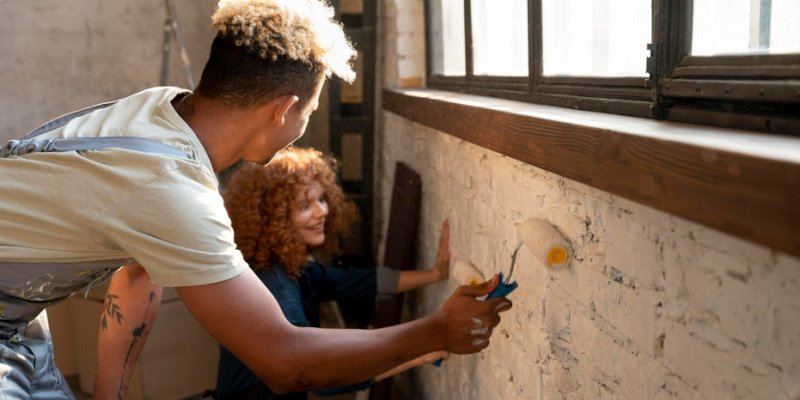
What’s listed are 10 projects you can start today, to begin your DIY journey, which are safe and easy to do with a bit of learning and know-how. Each of these projects will save you money by not having to hire a professional.
🔨 The Middle Ground
10 Home Projects Perfect for Beginner DIYers
✨ Welcome to Your DIY Journey! Not every home project requires a professional, and not every DIY attempt ends in disaster. This guide introduces you to ten beginner-friendly projects that offer the perfect balance: meaningful home improvements that teach valuable skills, save real money, and have a low risk of catastrophic failure. These are the projects where you can learn, grow, and genuinely be proud of what you’ve accomplished.
Finding Your Sweet Spot: The Beginner-Friendly Zone 🎯
What Makes a Project Beginner-Friendly?
✅ Mistakes are fixable – Paint over that missed spot, unscrew that crooked shelf, redo that caulk line
✅ No specialized tools required – Basic tool kit from any hardware store will do
✅ Minimal safety risk – Falls, electrocution, or toxic exposure aren’t concerns
✅ Visible progress quickly – You see results in hours or days, not weeks
✅ Clear stopping points – You can take breaks without leaving your house in chaos
✅ Transferable skills – What you learn applies to future projects
Understanding Our Rating System 📊
Each project below includes detailed ratings to help you choose the right starting point for your skill level and schedule.
| Rating Category | What It Means |
|---|---|
| Difficulty Level | ⭐ = Anyone can do this | ⭐⭐⭐ = Requires patience & some skill |
| Time Commitment | Realistic time including prep, execution, and cleanup |
| Budget Range | Total cost including all materials and basic tools |
| Impact Level | How dramatically it transforms your space |
| Satisfaction Score | How proud you’ll feel when it’s done (based on beginner feedback) |
The 10 Perfect Beginner Projects 🏆
Why This is Perfect for Beginners
Painting teaches you patience, attention to detail, and the satisfaction of dramatic transformation. Mistakes? Paint over them. Don’t like the color? Paint again. It’s the ultimate forgiving first project.
Complete Budget Breakdown
| Item | Quantity | Unit Cost | Total |
|---|---|---|---|
| Quality Paint (12×14 room) | 2 gallons | $35 | $70 |
| Primer (if needed) | 1 gallon | $25 | $25 |
| Roller frame & covers | 1 set | $15 | $15 |
| Quality angled brushes | 2 | $12 | $24 |
| Paint tray & liners | 1 | $8 | $8 |
| Painter’s tape (quality) | 2 rolls | $8 | $16 |
| Drop cloths | 2 | $12 | $24 |
| Spackle & sandpaper | – | – | $18 |
| TOTAL PROJECT COST | $200 | ||
| Pro Quote for Same Room: | $400-$600 | ||
| YOUR SAVINGS: | $200-$400 | ||
Step-by-Step Timeline
🕐 Day 1 (Saturday Morning – 3 hours)
• Move furniture to center, cover with drop cloths
• Remove outlet covers, light switch plates
• Fill nail holes with spackle, let dry
• Clean walls with damp cloth
🕐 Day 1 (Saturday Afternoon – 2 hours)
• Sand spackled areas smooth
• Apply painter’s tape to trim, edges, ceiling line
• Take a break – you’ve earned it!
🕐 Day 2 (Sunday Morning – 4 hours)
• Apply primer if needed (dark colors, new drywall)
• Start first coat: “cut in” edges with brush
• Roll walls in “W” pattern for even coverage
• Let dry 4-6 hours
🕐 Day 2 (Sunday Evening – 3 hours)
• Apply second coat (same process)
• Remove painter’s tape while paint is still slightly wet
• Touch up any missed spots
🕐 Day 3 (Following Weekend – 1 hour)
• Replace outlet covers, switch plates
• Move furniture back
• Stand back and admire your work!
💡 Pro Tips From Experienced DIYers
- Invest in quality paint: Cheap paint requires 3-4 coats. Good paint covers in 2.
- Don’t skip primer: Especially over dark colors or fresh drywall – it saves you money in the long run.
- Use painter’s tape correctly: Press edges down firmly to prevent bleed-through.
- Cut in first, roll second: Always do edges with a brush before rolling the main wall.
- Keep a wet edge: Don’t let paint dry before you roll adjacent sections.
- Remove tape at the right time: While paint is still slightly tacky prevents peeling.
✅ What You’ll Learn
• Surface preparation importance
• Patience with drying times
• Clean lines and edges technique
• Roller technique for smooth finish
• Project planning and sequencing
Why This is Perfect for Beginners
This is the project that gives you immediate confidence. It’s literally just unscrewing old hardware and screwing in new hardware. If a six-year-old can use a screwdriver, you can do this project. But the visual impact? Huge. Brass hardware from the 1990s instantly ages a house. Modern matte black or brushed nickel makes everything look updated.
Budget Breakdown (Per Door)
| Item | Budget Option | Mid-Range | Premium |
|---|---|---|---|
| Door Knob Set | $12 | $25 | $45 |
| Hinges (3 per door) | $9 | $18 | $30 |
| Strike Plate | $3 | $5 | $8 |
| TOTAL PER DOOR | $24 | $48 | $83 |
💰 Whole House Savings: For 10 doors, you’ll spend $240-$830 depending on quality level. A handyman would charge $400-$800 in labor alone, plus markup on hardware. Your savings: $300-$600
Tools You’ll Need
- ✓ Phillips head screwdriver (or power drill with Phillips bit)
- ✓ Flathead screwdriver (for hinge pins)
- ✓ Hammer (for stubborn hinge pins)
- ✓ That’s literally it. Seriously.
Simple Process
Step 1: Remove Old Knob (5 minutes)
Unscrew the two screws on the interior side. The whole knob assembly pulls apart.
Step 2: Install New Knob (10 minutes)
Thread the new mechanism through the hole. Line up the screws. Tighten until snug (not super tight – you can strip the holes).
Step 3: Replace Hinges (Optional – 20 minutes per door)
Tap out the hinge pin with a nail and hammer. Unscrew old hinge, screw in new one. Replace pin. Do this one hinge at a time so the door stays aligned.
Step 4: Update Strike Plate (5 minutes)
Unscrew old plate, screw in new one. Make sure it aligns with the door latch.
🎨 Design Tip: Create Cohesion
Choose ONE finish for the entire house – matte black, brushed nickel, or oil-rubbed bronze are all modern choices. Mixing finishes looks chaotic. Consistency looks intentional and professional.
Why This is Perfect for Beginners
Floating shelves teach you two critical skills: using a level (everything in DIY depends on level) and finding studs (the key to hanging anything heavy). Plus, they’re endlessly practical and totally on-trend. Master this project and you can hang anything: cabinets, TVs, artwork.
Complete Budget (3 Shelves)
| Item | Quantity | Cost | Total |
|---|---|---|---|
| Floating shelf brackets | 3 sets | $15/set | $45 |
| Wood boards (1x8x36″) | 3 | $12 | $36 |
| Wood stain or paint | 1 can | $15 | $15 |
| Wood screws | 1 box | $8 | $8 |
| Level (if you don’t have one) | 1 | $12 | $12 |
| Stud finder | 1 | $15 | $15 |
| TOTAL PROJECT COST | $131 | ||
⚠️ The Most Common Mistake
Not anchoring to studs. Drywall alone holds maybe 10 pounds. If you’re putting books, plants, or decorative items on shelves, you MUST hit studs. This is not optional. Use that stud finder, or use the “knock test” (studs sound solid, hollow areas between studs sound… hollow).
Installation Process
Step 1: Finish Your Wood (Day 1)
Sand boards smooth, apply stain or paint, let dry overnight. This step happens before installation.
Step 2: Find Studs (15 minutes)
Use stud finder to locate studs where you want shelves. Mark with light pencil. Studs are typically 16″ apart.
Step 3: Mark Level Lines (10 minutes)
Use level to draw a light line where shelf will go. This is your guide for mounting brackets.
Step 4: Mount Brackets (20 minutes per shelf)
Drill pilot holes, screw brackets into studs. Use level to ensure brackets are aligned perfectly.
Step 5: Attach Shelves (5 minutes per shelf)
Slide shelf onto brackets, secure with screws from underneath if needed. Check level one final time.
✅ Skills Mastered
- Finding studs in walls
- Using a level properly
- Drilling pilot holes
- Wood finishing basics
- Measuring and marking accurately
🎓 Quick Reference: Project Comparison Chart
Not sure where to start? Use this chart to find your perfect first project.
| Project | Difficulty | Time | Budget | Impact | Best For |
|---|---|---|---|---|---|
| Interior Painting | ⭐⭐ | 1-2 weekends | $150-$300 | ⭐⭐⭐⭐ | Patient learners |
| Door Hardware | ⭐ | 1-2 hrs/door | $15-$40 | ⭐⭐⭐ | Quick wins |
| Floating Shelves | ⭐⭐ | 2-3 hours | $80-$200 | ⭐⭐⭐⭐ | Tool learners |
| Backsplash Tile | ⭐⭐⭐ | 1 weekend | $200-$500 | ⭐⭐⭐⭐⭐ | Detail-oriented |
| Light Fixtures | ⭐⭐ | 30 min/fixture | $40-$200 | ⭐⭐⭐⭐ | Style upgraders |
| Bathroom Caulking | ⭐⭐ | 2-3 hours | $25-$50 | ⭐⭐⭐ | Problem solvers |
| Faucet Replacement | ⭐⭐ | 2-4 hours | $100-$300 | ⭐⭐⭐⭐ | Practical types |
| Crown Molding | ⭐⭐⭐ | 2-3 days | $150-$400 | ⭐⭐⭐⭐⭐ | Precision seekers |
| Closet Organizer | ⭐⭐ | 4-6 hours | $200-$600 | ⭐⭐⭐⭐ | Organization lovers |
| Accent Wall | ⭐⭐ | 1 weekend | $100-$300 | ⭐⭐⭐⭐⭐ | Creative souls |
Projects 4-10: Expanding Your Skills 🚀
Now that you’ve seen the detailed breakdown for the first three projects, here are seven more beginner-friendly options with all the essential information you need to get started.
Project #4: Kitchen Backsplash Tile 🔷
Difficulty: ⭐⭐⭐ (3/5) | Time: 1 weekend | Budget: $200-$500 | Impact: ⭐⭐⭐⭐⭐
Why It’s Great for Beginners
Backsplash tiling is the perfect introduction to tile work because the area is small, vertical (easier to work on than floors), and forgiving (cabinets hide the bottom edge, countertops hide mistakes there too). Plus, the transformation is stunning.
Budget Breakdown
• Subway tile (35 sq ft): $80-$200
• Thin-set mortar: $25
• Grout: $15
• Tile spacers: $8
• Notched trowel: $12
• Grout float: $10
• Tile cutter (rent): $40
Total: $190-$310 (Pro install: $800-$1,500)
Pro Tips
✓ Start from the center and work outward for symmetry
✓ Use spacers religiously – consistency is everything
✓ Let thin-set cure fully (24 hours) before grouting
✓ Seal grout after it cures to prevent staining
Project #5: Light Fixture Replacement 💡
Difficulty: ⭐⭐ (2/5) | Time: 30-60 min per fixture | Budget: $40-$200/fixture | Impact: ⭐⭐⭐⭐
Why It’s Great for Beginners
This teaches basic electrical work safely – you’re just connecting wires, not running new circuits. Modern fixtures come with clear instructions, and the visual impact per dollar spent is incredible. Builder-grade lights age a house instantly; updated fixtures modernize it just as fast.
Budget Breakdown (per fixture)
• New light fixture: $40-$200 (depending on style)
• Wire nuts (if not included): $3
• Voltage tester: $12 (essential for safety)
Total per fixture: $55-$215
5 fixtures updated: $275-$1,075 vs. electrician quote: $600-$1,500
Critical Safety Steps
⚠️ Turn off power at the breaker, not just the switch
⚠️ Use voltage tester to confirm power is off
⚠️ Take a photo of wire connections before disconnecting
⚠️ Match wire colors: black to black, white to white, ground to ground
⚠️ Secure wire nuts tightly and test by gently tugging
Project #6: Bathroom Caulking Refresh 🚿
Difficulty: ⭐⭐ (2/5) | Time: 2-3 hours | Budget: $25-$50 | Impact: ⭐⭐⭐
Why It’s Great for Beginners
Old, moldy caulk makes even clean bathrooms look dirty. Fresh caulk makes everything look new. This project teaches patience and technique – rushing creates messy lines. Take your time and you’ll get professional-looking results.
Budget Breakdown
• Caulk remover tool: $8
• 100% silicone caulk (2 tubes): $16
• Caulk gun: $12
• Painter’s tape: $6
• Denatured alcohol (smoothing): $8
Total: $50 (Handyman quote: $150-$250)
The Perfect Caulk Line Technique
1. Remove all old caulk completely (this is 60% of the work)
2. Clean thoroughly with alcohol, let dry
3. Apply painter’s tape above and below caulk line
4. Cut caulk tube tip at 45° angle (small opening)
5. Apply steady bead in one continuous motion
6. Smooth with wet finger immediately
7. Remove tape while caulk is still wet
Project #7: Kitchen/Bathroom Faucet Replacement 🚰
Difficulty: ⭐⭐ (2/5) | Time: 2-4 hours | Budget: $100-$300 | Impact: ⭐⭐⭐⭐
Why It’s Great for Beginners
Faucets are designed to be homeowner-replaceable. Modern faucets come with excellent instructions and all necessary parts. This teaches basic plumbing connections without cutting pipes or making permanent changes. Plus, a leaking or outdated faucet is both wasteful and ugly.
Budget Breakdown
• New faucet: $80-$250 (quality matters here)
• Basin wrench: $15 (crucial tool)
• Plumber’s putty: $5
• Teflon tape: $3
• Flexible supply lines: $12 (if not included)
Total: $115-$285 (Plumber: $250-$450 including labor)
Process Overview
📍 Turn off water supply valves under sink
📍 Disconnect supply lines (bucket underneath!)
📍 Use basin wrench to remove mounting nuts
📍 Lift out old faucet, clean mounting surface
📍 Install new faucet per instructions
📍 Connect supply lines (hand-tight plus 1/4 turn)
📍 Turn water on slowly, check for leaks
💡 Biggest Time Saver: If your old faucet has corroded mounting nuts, spray with penetrating oil the night before. This 5-minute prep can save you 2 hours of frustration.
Project #8: Crown Molding Installation 👑
Difficulty: ⭐⭐⭐ (3/5) | Time: 2-3 days for one room | Budget: $150-$400 | Impact: ⭐⭐⭐⭐⭐
Why It’s Great for Beginners (Who Are Ready to Level Up)
Crown molding is where you graduate from “beginner” to “competent DIYer.” It requires precision, teaches you to use a miter saw, and demands patience. But the visual impact is extraordinary – it makes standard rooms look custom and expensive.
Budget Breakdown (12×14 room)
• Crown molding (60 linear feet): $90-$200
• Miter saw rental (weekend): $60
• Finishing nails & construction adhesive: $20
• Wood filler & caulk: $15
• Paint/stain: $25
Total: $210-$320 (Carpenter: $600-$1,200)
The Miter Cut Challenge
Corner cuts are what make or break crown molding. Inside corners need compound miter cuts (set saw to 31.6° bevel, 33.9° miter for standard 38° spring angle crown). Outside corners use opposite angles.
Beginner-Friendly Hack:
• Buy pre-cut corner blocks ($8 each)
• Install blocks first, then cut straight pieces to fit between them
• Eliminates 90% of the difficult cuts
• Adds architectural detail as a bonus
Project #9: Custom Closet Organizer System 👔
Difficulty: ⭐⭐ (2/5) | Time: 4-6 hours | Budget: $200-$600 | Impact: ⭐⭐⭐⭐
Why It’s Great for Beginners
Modular closet systems from hardware stores are designed for DIY installation. They combine the shelf-hanging skills you learned in Project #3 with planning and measurement. The daily quality-of-life improvement is significant, and visitors always comment on organized closets.
Budget Breakdown (Standard 8′ closet)
• Closet kit system: $180-$500
• Additional shelves: $20-$50
• Wall anchors/brackets: $15
• Level & measuring tape (if needed): $25
Total: $240-$590 (Professional install: $500-$1,200)
Planning is 70% of Success
✓ Measure your closet three times before ordering
✓ Inventory what you’re storing (hanging items, folded items, shoes)
✓ Plan hanging rod height: 40″ for shirts, 65″ for dresses
✓ Include at least one adjustable shelf for flexibility
✓ Install top track level – everything else follows from there
Project #10: Accent Wall with Special Technique 🎨
Difficulty: ⭐⭐ (2/5) | Time: 1 weekend | Budget: $100-$300 | Impact: ⭐⭐⭐⭐⭐
Why It’s Great for Beginners
An accent wall lets you experiment with bold color, texture, or pattern without committing an entire room. Try techniques like ombré, geometric patterns, board and batten, or peel-and-stick wallpaper. It’s painting with a creative twist that builds both skills and confidence.
Budget Breakdown (per technique)
Option 1: Bold Paint Color
Paint & supplies: $75-$100
Option 2: Board and Batten
MDF boards: $80
Construction adhesive & nails: $20
Paint: $40
Total: $140
Option 3: Peel-and-Stick Wallpaper
Wallpaper (one wall): $120-$250
Smoothing tool: $10
Total: $130-$260
Option 4: Geometric Pattern
2 paint colors: $70
Painter’s tape (lots): $25
Total: $95
Beginner-Friendly Technique: Vertical Stripes
1. Paint entire wall base color, let dry completely
2. Measure and mark stripe widths (6-12″ wide works well)
3. Use level to draw vertical lines
4. Apply painter’s tape precisely on lines
5. Paint every other stripe with accent color
6. Remove tape while paint is still slightly wet
Result: Professional-looking feature wall that cost under $100
Your DIY Toolkit: What to Invest In First 🧰
Don’t blow your budget on tools before your first project. Build your collection strategically as you tackle projects. Here’s the priority order:
| Priority Level | Tool | Cost | Why You Need It |
|---|---|---|---|
| TIER 1 (Get First) |
Screwdriver set Hammer Tape measure Level Utility knife |
$15 $12 $10 $12 $8 |
Used in almost every project. Can’t borrow these every time. |
| TIER 2 (Next Purchases) |
Cordless drill Stud finder Adjustable wrench Pliers set |
$60 $15 $18 $25 |
Open up more project possibilities. Drill especially worth the investment. |
| TIER 3 (As Needed) |
Miter saw Circular saw Tile cutter Nail gun |
$150 $120 $180 $130 |
Rent for first use. Buy if you use multiple times or find deals. |
| TIER 4 (Specialty) |
Voltage tester Basin wrench Pipe wrench Oscillating tool |
$12 $15 $30 $80 |
Buy only when project specifically requires it. |
💰 Smart Tool Buying Tips
- Hand tools: Buy quality – they last forever. Cheap screwdrivers strip screws.
- Power tools: Mid-range brands (Ryobi, Craftsman) are fine for homeowners. You’re not building houses daily.
- Rental options: Home Depot and Lowe’s rent expensive tools by the day ($40-80). Perfect for one-time use.
- Battery ecosystem: If you buy one cordless tool, stick with that brand – batteries are interchangeable within brands.
- Used tools: Facebook Marketplace and estate sales have barely-used tools at 50% off retail.
Common Beginner Mistakes (And How to Avoid Them) ⚠️
Mistake #1: Not Reading Instructions Completely
The Problem: You open the box, glance at step 1, and start assembling. By step 7, you realize you were supposed to install a bracket at step 3, and now you have to disassemble everything.
The Fix: Read all instructions before touching any tools. Lay out all parts. Understand the sequence. Those 10 minutes save you an hour of frustration.
Mistake #2: Skipping Surface Prep
The Problem: You want to paint, so you start painting. The surface is dirty, greasy, or not sanded. Your beautiful new paint peels off in six months.
The Fix: Prep work is 50% of the project. Clean, sand, prime, tape. Yes, it’s boring. Yes, it’s absolutely necessary.
Mistake #3: Buying Cheap Materials to Save Money
The Problem: You buy the $15/gallon paint instead of the $35/gallon paint. It takes 4 coats instead of 2. You use more paint, more time, and still get inferior results.
The Fix: Splurge on materials, save on labor. Quality paint, faucets, hardware, and tile are worth the extra cost. You’re already saving thousands on labor.
Mistake #4: Not Measuring Three Times
The Problem: “Measure twice, cut once” is cliché for a reason. You measure once, cut confidently, and oops – it’s 2 inches too short. That piece is now scrap.
The Fix: Measure. Double-check. Mark clearly. Measure again before cutting. Walk away and verify one more time. Seems excessive? Wait until you’ve wasted $40 of crown molding.
Mistake #5: Tackling Too Much at Once
The Problem: Inspired by Pinterest, you decide to renovate your entire kitchen in one weekend. By Sunday night, you have a half-painted room, disconnected appliances, and nowhere to cook dinner.
The Fix: One project to completion, then start the next. Living in construction chaos destroys motivation. Finish the backsplash, enjoy it for a week, then tackle the cabinet painting.
Mistake #6: Ignoring Safety Gear
The Problem: “I’m just cutting one board, I don’t need safety glasses.” Then a wood chip flies into your eye and you spend 4 hours in urgent care.
The Fix: Safety glasses, dust masks, gloves, ear protection – they’re cheap insurance. Your eyes and ears don’t regenerate.
Your First Project: Getting Started This Weekend 🚀
You’ve read the guide. You’re feeling inspired. Here’s how to actually begin instead of just thinking about beginning.
The 5-Day Launch Plan
Monday: Choose & Research
Pick ONE project from this list based on your needs and confidence level. Watch 2-3 YouTube videos. Read reviews of materials.
Tuesday: Plan & Budget
Create detailed shopping list. Check what tools you have vs. need to buy/borrow. Set realistic budget including 20% contingency.
Wednesday: Shop
Hit the hardware store. Ask questions – employees know things. Buy quality materials. Don’t forget the small stuff (sandpaper, tape, drop cloths).
Thursday: Prep Work
Clear the area. Move furniture. Do surface prep. Having everything ready makes weekend work smooth and enjoyable.
Weekend: Execute
Start early. Take breaks. Don’t rush. Follow your plan. Step back periodically to check your work. Celebrate when you’re done!
📱 Recommended Resources for Beginners
YouTube Channels Worth Following:
• This Old House – Professional techniques explained clearly
• Home Repair Tutor – Specifically for beginners
• See Jane Drill – Empowering for women DIYers
• Dad, How Do I? – Basic skills your dad might have taught you
Free In-Person Resources:
• Home Depot and Lowe’s free workshops (check store calendars)
• Local library DIY classes (many offer tool lending libraries too)
• Community college continuing education courses
FAQ: Your Beginner Questions Answered 💬
Q: I’ve never done ANY home improvement. Which project should I start with?
Start with door hardware replacement (#2). It’s genuinely hard to mess up, requires minimal tools, provides instant gratification, and builds your confidence. Once you’ve successfully updated 5-10 doors, you’ll feel ready to tackle painting or shelf installation.
Q: How do I know if I’m in over my head on a project?
Warning signs: You’re Googling “is this dangerous?” You’ve restarted the same step 3+ times. The instructions assume knowledge you don’t have. You feel genuinely stressed rather than challenged. If any of these apply, pause the project and either research more or call in a pro to finish.
Q: What if I make a mistake that’s visible?
First: Most mistakes are fixable. Patched holes, sanded rough spots, repainted areas. Second: You’ll notice imperfections way more than guests ever will. Third: Perfection is not the goal; improvement is. Your painted room with one slightly uneven edge is infinitely better than the dingy walls you started with.
Q: How do I find time for these projects with a full-time job and family?
Break projects into mini-sessions. Paint one wall per evening instead of trying to do an entire room on Saturday. Install one shelf per weekend. The “weekend warrior” approach looks good on HGTV but burns out real people. Slow and steady actually finishes more projects than sporadic all-nighters.
Q: Should I practice techniques before starting the actual project?
For some projects, absolutely. Practice caulking technique on cardboard. Test paint colors on poster board. Try tile cuts on scrap pieces. Practicing doesn’t mean you lack confidence – it means you’re smart enough to learn on materials that don’t matter before working on your actual home.
Q: What do I do with leftover materials after projects?
Keep paint (labeled with room name and date) for touch-ups. Store extra tiles, flooring, or backsplash for future repairs. Extra hardware goes in a labeled container in your garage. Leftover lumber? Save it – you’ll use it on the next project. Return unopened items within the return window. Donate usable materials to Habitat for Humanity ReStore.
The Real Secret to DIY Success 🔑
It’s not about having natural talent or being “handy.”
It’s about choosing appropriate projects, following instructions, learning from mistakes, and not quitting when things get tricky.
Every expert was once a beginner who didn’t give up.
Your DIY Journey Starts With One Project ✨
Pick one project from this list.
Buy the materials this week.
Start this weekend.
Two weeks from now, you’ll be standing in your improved space thinking, “I did that.” And you’ll be planning your next project.
That’s how DIYers are made – one successful project at a time.
The Bottom Line 🎯
These ten projects represent the sweet spot of home improvement: challenging enough to teach you real skills, forgiving enough that beginners can succeed, and impactful enough to dramatically improve your home.
You’ll save thousands of dollars in professional labor while learning skills you’ll use for decades.
The best home improvement investment isn’t a tool or material – it’s confidence in your own abilities.
🔨 Stop Planning. Start Building. 🔨
Your home is waiting for your personal touch. This weekend is the perfect time to start.