


Let me introduce you to James, a 42-year-old software engineer. Smart guy. Built his own gaming PC, installed his own home network, even coded his own home automation system. He figured electrical work couldn’t be that much harder than programming. So he decided to do some home renovating himself
He was catastrophically wrong.
🚨 Red Flags: When DIY Goes Wrong
5 Projects You Should Never Attempt Yourself
⚠️ A Word of Warning: This article contains real stories of DIY disasters that resulted in property damage, injury, and five-figure repair bills. If you’re currently planning any of these projects, please read carefully before making a decision you might deeply regret.
The $47,000 Mistake: Why This Article Exists 💸
What started as a weekend project to upgrade his home’s electrical panel turned into a six-month nightmare involving the fire department, his insurance company, temporary housing, and ultimately a $47,000 bill for repairs after an electrical fire damaged a third of his house.
“I genuinely thought I could figure it out,” James told me. “I watched probably fifteen YouTube videos. I read forum posts. I felt prepared. But the reality is, there’s a reason electricians go through years of training. Some knowledge only comes from experience, and some mistakes you don’t get to learn from.”
James’s story isn’t unique. Every year, thousands of homeowners attempt projects that fall firmly into the “never DIY” category, and the consequences range from inconvenient to catastrophic.
This article is your warning label, your stop sign, your chance to learn from other people’s expensive mistakes instead of making them yourself.
The Never-DIY List: Five Projects That Require Professionals 🛑
After interviewing contractors, insurance adjusters, building inspectors, and homeowners who learned these lessons the hard way, five categories of projects consistently emerged as the most dangerous and costly when attempted by amateurs. Here’s what you need to know.
📖 Real Story: The Panel Upgrade Disaster
Marcus from Austin decided to upgrade his 100-amp panel to 200-amp service himself. He ordered the parts online, watched tutorials, and felt confident. Three critical mistakes later, his newly installed panel started arcing during a thunderstorm. The resulting fire destroyed his garage, melted siding, and caused $38,000 in damage. His insurance denied the claim because unpermitted, unlicensed electrical work violated his policy.
Total Cost: $38,000 out-of-pocket + nearly losing his home
Why Electrical Work is Different
Unlike a crooked tile or a poorly painted wall, electrical mistakes are invisible until they become catastrophic. You can’t see if connections are tight enough, if wire gauges are appropriate for the load, or if you’ve created a path for electrical arcing. By the time you discover the problem, your house might be on fire.
| Risk Factor | Why It Matters |
|---|---|
| Death or Serious Injury | Electrocution from 120V can be fatal. 240V almost certainly is. |
| House Fires | Faulty electrical work causes 28,600 home fires annually in the US |
| Insurance Denial | Most policies exclude coverage for unpermitted DIY electrical work |
| Code Violations | Will fail inspection, prevent home sales, or require complete redoing |
| Resale Complications | Unpermitted work must be disclosed and can kill deals |
💡 When DIY Electrical IS Okay
There are some electrical projects appropriate for experienced DIYers:
- Replacing existing light fixtures (not adding new ones)
- Installing dimmer switches or smart switches
- Replacing outlets and switch plates
- Installing plug-in GFCI adapters
The rule: If it requires opening the breaker panel or running new wire, hire an electrician.
📖 Real Story: The Bathroom Remodel Flood
Christina and her husband decided to move their toilet three feet during a bathroom renovation. They watched videos, bought the right parts, and thought they understood drain slope requirements. They didn’t. The toilet drained slowly from day one. Six months later, they noticed a smell. Behind the wall, improper slope had caused sewage to pool in the drain line, eventually leaking into the subfloor and wall cavity. The resulting mold remediation required removing subfloor, wall studs, and insulation.
Total Cost: $22,000 for mold remediation + bathroom rebuild
Why Plumbing Failures Are So Expensive
Water damage is insidious. A small leak might go unnoticed for weeks or months while it destroys subfloors, wall cavities, and creates perfect conditions for mold growth. By the time you notice the problem, the damage has often spread far beyond the original leak point.
🧮 The True Cost of Plumbing Mistakes
Immediate Repair: $2,000 – $5,000 to fix the plumbing error
Water Damage: $5,000 – $15,000 for drying, subfloor replacement, drywall
Mold Remediation: $3,000 – $10,000 if moisture sits too long
Temporary Housing: $100 – $200/night if home is unlivable
Insurance Deductible: $1,000 – $5,000 (if they even cover DIY work)
Average Total: $15,000 – $35,000
Compare that to: $800 – $2,500 to hire a plumber from the start
The Hidden Complexity of Plumbing
Most people understand that pipes carry water. What they don’t understand is:
- Venting is critical – Every drain needs proper venting or it won’t drain correctly and will create sewer gas issues
- Slope matters precisely – Drain lines need 1/4 inch drop per foot. Too much or too little causes problems.
- Pipe sizing affects everything – Wrong size pipes create pressure issues, slow drains, or inadequate water flow
- Code requirements are extensive – Distance to vents, trap requirements, cleanout placement all have specific rules
- Water hammer can damage pipes – Improper installation causes pressure spikes that stress connections
✅ DIY-Friendly Plumbing Projects
Some plumbing work is reasonable for DIYers:
- Replacing faucets and showerheads
- Installing new toilet seats or wax rings
- Fixing leaky shut-off valves
- Replacing garbage disposals (if drain lines don’t change)
- Installing under-sink water filters
The rule: If you’re moving pipes, adding drains, or touching anything behind walls, call a plumber.
📖 Real Story: The Load-Bearing Wall Nightmare
Derek wanted an open-concept living space. He removed what he thought was a non-structural wall between his kitchen and living room one Saturday morning. By Monday evening, he noticed the ceiling had developed a crack. By Wednesday, the crack had widened to an inch and the ceiling was visibly sagging. He’d removed a load-bearing wall without proper support. The entire second floor was settling. Emergency structural engineers had to install temporary support columns while they designed a proper solution. The fix required installing a massive steel beam through his ceiling, supported by new footer foundations in his basement.
Total Cost: $67,000 + condemned house for 3 months during repairs
Why Structural Work is in a League of Its Own
With electrical or plumbing, mistakes might cause fires or leaks. With structural work, mistakes can cause your house to collapse. There’s no room for error, no chance to learn as you go, and no forgiveness for getting it wrong.
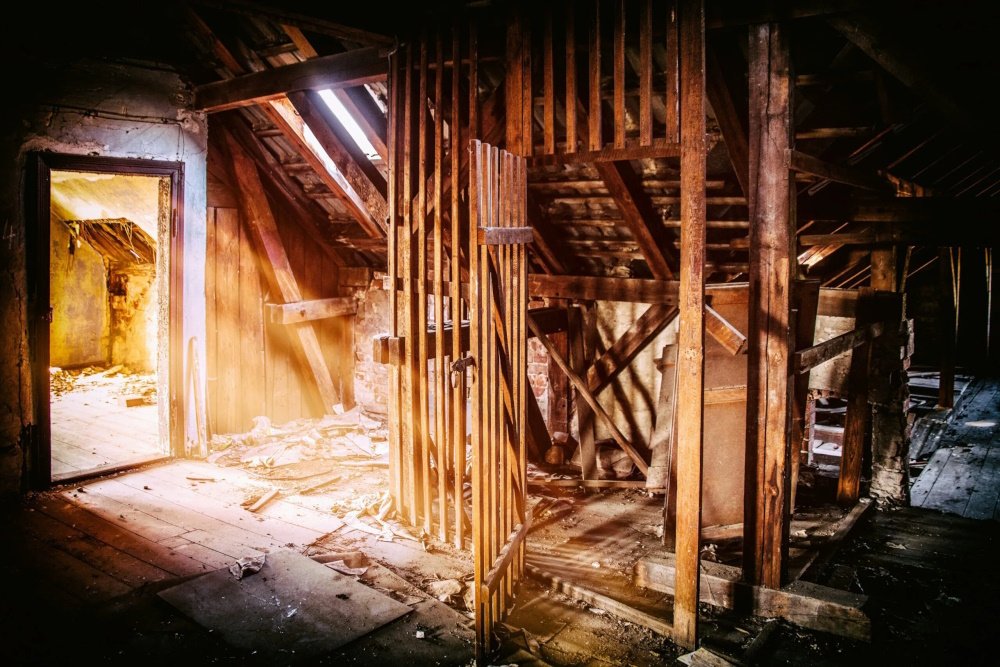
⚠️ How to Identify Load-Bearing Walls
Here’s the problem: You can’t reliably identify load-bearing walls without professional assessment. Common myths:
❌ MYTH: “Walls parallel to joists aren’t load-bearing”
Reality: Not always true, especially in older homes or with truss systems
❌ MYTH: “Interior walls don’t bear loads”
Reality: Many interior walls are primary load-bearing elements
❌ MYTH: “If there’s no beam above it, it’s not structural”
Reality: The wall itself might be the beam equivalent
The only way to know: Hire a structural engineer to assess. Cost: $300-$800. Cost of being wrong: $50,000+
The Ripple Effects of Structural Mistakes
| Consequence | Long-Term Impact |
|---|---|
| Ceiling/Floor Sagging | Progressive damage that worsens over time, eventually requiring complete rebuilding |
| Foundation Cracking | Can compromise entire home stability, affecting resale and insurability |
| Door/Window Binding | Indicates shifting structure; symptom of larger underlying problem |
| Wall Cracks | Continue spreading, leading to moisture intrusion and further damage |
| Home Condemnation | Local authorities can deem home unsafe, forcing evacuation until repairs completed |
🛠️ What You SHOULD Hire For Structural Work
- Structural Engineer: Assesses load requirements and designs solution ($500-$2,000)
- Licensed Contractor: Executes the engineering plan properly ($5,000-$20,000+)
- Building Inspector: Verifies work meets code before closing walls (permit fees $200-$1,000)
Yes, it’s expensive. But it’s a fraction of the cost of fixing a structural failure.
📖 Real Story: The Close Call
Tom decided to extend his gas line to accommodate a new range location in his kitchen remodel. He bought the appropriate black iron pipe, pipe dope, and felt confident after researching online. He completed the installation and tested it with soapy water – saw no bubbles, assumed he was good. Two weeks later, his wife complained about headaches and nausea. Their carbon monoxide detector was in the basement and not sensitive enough to pick up the slow leak. When Tom finally called a plumber to inspect, the technician found multiple improperly threaded connections. “You’re lucky you called me instead of the coroner,” the plumber told him.
They were ten days away from a potential explosion or lethal gas buildup.
The Invisible Killer
Unlike water leaks that you can see or electrical problems that usually trip breakers, gas leaks are insidious. Natural gas is odorless by nature – the smell is added as a safety measure, but:
- Small leaks may not produce detectable odor
- Gas can travel through wall cavities and emerge far from the leak point
- Carbon monoxide (from incomplete combustion) is completely odorless and deadly
- Gas accumulation in basements or crawl spaces may go unnoticed
- You can become “nose blind” to the smell if exposure is constant
What Makes Gas Work So Specialized
Licensed gas fitters undergo extensive training because the margin for error is literally zero. They understand:
🔧 Proper Threading Depth
Too shallow and connections will leak. Too deep and you’ll crack fittings. There’s a specific range measured in thread counts.
🔧 Correct Pipe Sizing
Based on BTU demand, line length, and pressure. Wrong size creates pressure drop or over-pressurization.
🔧 Sealant Selection
Different sealants for different gas types and pressures. Using the wrong one causes leaks.
🔧 Pressure Testing Protocols
Soap bubble tests are inadequate. Professional pressure testing with gauges is mandatory.
🔧 Code Requirements
Clearances, support spacing, routing restrictions, shutoff valve placement all strictly regulated.
⚠️ THE ABSOLUTE RULE ⚠️
NEVER, UNDER ANY CIRCUMSTANCES, ATTEMPT DIY GAS LINE WORK.
No YouTube tutorial, no matter how detailed, is worth risking your family’s lives.
No amount of money saved is worth the risk of an explosion.
ALWAYS HIRE A LICENSED GAS FITTER. NO EXCEPTIONS.
📖 Real Story: The DIY Roof Replacement
Kevin priced out a roof replacement at $12,000. He figured he could do it himself for $4,000 in materials. Over three weekends, he and his brother-in-law installed new shingles. They felt proud of the work and the savings. One year later, during an inspection for refinancing, the inspector found numerous issues: improper nailing pattern, inadequate underlayment overlap, poor flashing around the chimney, and missing drip edge. The bank required repairs before approving the loan. Kevin ended up paying a roofing company $15,000 to tear off his DIY work and do it correctly. His manufacturer’s warranty was void because installation didn’t meet specifications.
Total Cost: $4,000 (DIY materials) + $15,000 (professional do-over) = $19,000 (vs. $12,000 original quote)
The Hidden Complexity of Roofing
Shingles are just the visible part. Professional roofing involves understanding multiple integrated systems:
| Roof Component | Why It Matters | Common DIY Mistake |
|---|---|---|
| Underlayment | Secondary water barrier | Insufficient overlap or wrong type |
| Ice & Water Shield | Prevents ice dam damage | Not extending far enough up roof |
| Flashing | Seals roof penetrations | Improper installation or reusing old flashing |
| Ventilation | Prevents heat/moisture buildup | Blocking soffit vents or inadequate airflow |
| Nailing Pattern | Secures shingles against wind | Wrong nail count or placement |
| Drip Edge | Directs water away from fascia | Omitting it entirely or wrong installation order |
The Safety Factor
Beyond the technical challenges, roofing is physically dangerous. According to OSHA, falls from roofs are among the leading causes of death in construction. Consider:
⚠️ Roofing Safety Realities
- Steep pitch roofs: Require special safety equipment and training
- Heat exhaustion: Black roofs reach 150°F+ on summer days
- Material weight: Shingle bundles weigh 60-80 pounds each
- Weather windows: Must complete sections before rain arrives
- Height fear factor: Two-story homes mean 20+ foot falls
- Professional equipment: Proper harnesses, anchor points, scaffolding cost thousands
Professional roofers have insurance. If you fall off your roof, who pays your medical bills?

The Warranty Trap
Most people don’t realize that roofing material warranties require certified installation. DIY installation typically voids:
- Manufacturer’s material warranty (typically 25-50 years)
- Workmanship warranty (you have none as DIY’er)
- Wind resistance ratings (voided by improper installation)
- Algae resistance (if installation doesn’t meet specs)
When your 5-year-old DIY roof fails at year 7, you pay for complete replacement. If a pro installed it, they’d repair it free under warranty.
✅ Acceptable Roof DIY Projects
Some minor roof work is reasonable for confident DIYers:
- Replacing a few individual damaged shingles
- Cleaning gutters (with proper ladder safety)
- Applying roof coating to flat or very low-pitch roofs
- Sealing small flashing gaps with appropriate caulk
The rule: Full roof replacements, valley repairs, or anything on steep roofs should be professionally done.
The Common Thread: When to Stop 🛑
After researching dozens of DIY disasters, talking to contractors, insurance adjusters, and homeowners who learned expensive lessons, certain warning signs consistently emerge. If any of these apply to your project, stop and hire a professional:
🚩 The 10 Red Flags
1. Permits Are Required
If your municipality requires a permit, the work is beyond DIY scope. Permits exist for safety reasons.
2. The Project Involves Words Like “Main,” “Primary,” or “Service”
Main electrical panel, primary plumbing stack, service entrance – these are critical systems requiring pros.
3. You’re Not Sure If It’s Load-Bearing
When in doubt about structural elements, always hire an engineer for assessment. Guessing is gambling.
4. The How-To Guides Start With “This is Advanced…”
If tutorials warn about difficulty level or required experience, take them seriously. They’re not gatekeeping – they’re warning you.
5. Doing It Wrong Could Injure or Kill Someone
Electrical, gas, structural – if mistakes are potentially fatal, the savings aren’t worth the risk.
6. Your Insurance Might Not Cover DIY Mistakes
Call your insurance company before major projects. Many exclude coverage for unpermitted or DIY work on critical systems.
7. It Requires Specialized Tools You Don’t Own
If you need to rent or buy tools costing $500+, factor that into your cost comparison with hiring a pro.
8. The Work Will Be Covered Up (Hidden Behind Walls)
Problems with hidden work won’t appear until they’ve caused expensive damage elsewhere.
9. You Can’t Describe Why Each Step Matters
Following instructions without understanding the reasoning means you can’t adapt when the unexpected happens – and it will.
10. Your Gut Says “This Feels Risky”
Trust your instincts. That nervous feeling exists for a reason. Listen to it.
Making the Right Call: A Decision Framework 🎯
Here’s a practical framework for evaluating whether your project belongs on the “never DIY” list:
The Three-Question Test
Question 1: If This Goes Wrong, What’s the Worst Outcome?
• Death, injury, house fire, explosion, structural collapse → HIRE A PRO
• Extensive water damage, mold, major repairs → HIRE A PRO
• Cosmetic issues, redo required, inconvenience → CONSIDER DIY
Question 2: Does This Work Require a Licensed Professional Legally?
• Yes, by law → HIRE A PRO (it’s literally illegal to DIY)
• Requires permit but DIY allowed → HIRE A PRO (inspectors will find mistakes)
• No permit or license needed → CONSIDER DIY
Question 3: Will DIY Actually Save Significant Money?
Calculate honestly:
+ Materials at retail pricing
+ Tool purchases/rentals
+ Your time × your hourly rate
+ 20% contingency for mistakes
+ Value of warranty you’re forfeiting
• Still 40%+ cheaper than hiring → CONSIDER DIY
• Less than 40% savings → HIRE A PRO
If you answered “HIRE A PRO” to ANY question, do not attempt the project yourself.
FAQ: Your Questions Answered 💬
Q: Can’t I just watch YouTube videos to learn how to do these projects safely?
YouTube tutorials are great for learning concepts, but they can’t replace hands-on training, apprenticeship experience, and understanding WHY each step matters. Videos show successful attempts – you don’t see the years of failures and lessons that preceded that perfect 10-minute tutorial. More importantly, videos can’t assess whether your specific situation has complications the video didn’t cover.
Q: What if I can’t afford to hire a professional?
This is the hardest question because it’s a legitimate concern. However, consider: 1) Can you afford the average $30,000 cost of fixing a major DIY mistake? 2) Can you get financing or a home equity loan for the professional work? 3) Can the project wait until you’ve saved enough? 4) Are there government programs or rebates that could help? For critical systems (electrical, gas, structural), “I can’t afford a professional” often means “I can’t afford to do this project right now” – and that’s okay. Wait until you can do it safely.
Q: My friend/brother/neighbor did this project themselves. Why can’t I?
You don’t know what problems they created that haven’t manifested yet. That DIY electrical panel might be slowly cooking wires behind the walls. Their plumbing might be developing a slow leak in the wall cavity. Or they might have gotten genuinely lucky. Survivorship bias is real – you hear about the successes, not the disasters. Don’t let someone else’s apparent success convince you to take risks with your family’s safety and your financial security.
Q: How do I find a trustworthy contractor who won’t rip me off?
Get at least three written quotes. Verify their license and insurance (actually call and verify – don’t just take their word). Check references from jobs completed in the last 6 months. Look for complaints with your state contractor board and BBB. Never pay more than 30% upfront. Get everything in writing including change order procedures. Trust your gut – if someone feels shady, they probably are. The cheapest quote often comes from unlicensed operators or corner-cutters.
Q: Can I do part of the project and hire out the dangerous parts?
Absolutely! This is actually the smart approach. Do demolition, prep work, painting, and cleanup yourself. Hire licensed pros for electrical, plumbing, gas, and structural. This “hybrid approach” maximizes savings while minimizing risk. Just make sure the professional knows upfront that you’re doing the prep work – some won’t warranty work if you DIY certain elements.
Q: What about YouTube channels run by actual professionals – aren’t those safe to follow?
Professional channels are great for understanding concepts and learning proper techniques. BUT – they can’t assess your specific situation, local code requirements, or catch your mistakes. Use them for education, not as a substitute for hiring a professional. Even licensed pros call in specialists for work outside their expertise. If the pros do that, shouldn’t you?
Final Thoughts: Wisdom Over Ego 🧠
There’s a dangerous narrative in home improvement culture that suggests doing everything yourself is somehow more honorable, more manly, or proof of greater competence. This narrative has cost people their homes, their health, and in tragic cases, their lives.
The truth is that knowing your limitations and hiring appropriately is the real mark of wisdom. Licensed professionals exist for a reason. They’ve invested years in training, thousands of hours in practice, and carry insurance specifically because these projects are risky and complex.
The Real Measure of Success
It’s not how much you did yourself.
It’s whether your home is safe, your project is done correctly, and your family is protected.
Sometimes the smartest DIY decision is knowing when NOT to DIY.
⚠️ Remember James ⚠️
The software engineer at the beginning of this article who thought electrical work couldn’t be that hard?
His $47,000 mistake taught him a lesson he wishes he’d learned differently:
“The professional quote was $2,800. I’ll never forget that number. Such a small price for peace of mind compared to what my ego cost me.”
The Bottom Line 🎯
DIY culture is wonderful. Learning skills, saving money, and taking pride in your work are all admirable goals.
But some projects cross the line from “challenging DIY” into “reckless risk-taking.”
When it comes to major electrical work, major plumbing, structural modifications, gas lines, and roofing – hire the professionals.
Your family’s safety, your home’s integrity, and your financial security are worth more than any amount of money you might save.
🚨 Know Your Limits. Respect the Risks. Hire When It Matters. 🚨
Your future self will thank you for making the smart decision today.